13:26 min
Introduction to Marketing Measurement
What this section covers:
Why there's no single source of truthThe five measurement methodsSpeed as a structural edge
ECom brands pour 20 to 25% of revenue into marketing, which makes every daily budget call high-stakes, and measurement genuinely hard. This opening chapter lays out why there's no single provable truth for which channel drove a sale, why tool vendors are incentivised to make their own numbers shine, and introduces the five lenses you'll spend the rest of the course mastering.
25:23 min
Platform Attribution
What this section covers:
Attribution windows, decodedDouble-counting across platformsWhen to trust it, when not to
The numbers Meta, Google and TikTok report about themselves are convenient, free, and structurally biased. You'll see how default windows (Meta's 7-day click / 1-day view) inflate impact, why every platform happily claims the same purchase, and where opaque “modelled conversions” quietly fill the gaps. Essential for feeding the algorithms; dangerous as your only scoreboard.
34:50 min
Post-Purchase Surveys
What this section covers:
The one question that works20 to 50% response ratesImmune to privacy changes
The cheapest signal you're probably not using. One question on the order-confirmation page, “Where did you first hear about us?”, captures the podcast, the friend, the creator that never fired a pixel. You'll get the full setup: placement, 6 to 10 randomised options, follow-ups to kill ambiguity, and why to treat the data as directional only.
48:24 min
Multi-Touch Attribution (MTA)
What this section covers:
First-party beats last-clickWeighting credit, not splitting itThe click-based blind spot
The workhorse for day-to-day creative and campaign calls. Good MTA stitches the full journey with first-party and server-side tracking, resolves identity across devices, and weights credit intelligently instead of dumping it all on the last click. You'll learn why sloppy tracking silently loses 20 to 40% of conversions, and why even great MTA still under-credits awareness.
58:42 min
Marketing Mix Modeling (MMM)
What this section covers:
Baseline vs. incremental revenueSaturation & the next-euro questionNo cookies, no pixels
When click-based tracking goes blind on brand, TikTok and offline, modeling steps in. MMM reads aggregate spend and revenue to estimate each channel's true contribution, separates baseline sales from marketing-driven ones, and maps saturation curves so you know what the next euro actually buys. Privacy-safe, full-funnel, and increasingly daily thanks to Bayesian methods.
67:21 min
Incrementality Testing
What this section covers:
Geo-holdouts & synthetic controlIs retargeting actually incremental?Snapshots, not transferable truths
The closest thing to scientific proof. Geo-holdout tests run a channel in some regions and withhold it in others, then compare against a synthetic control to read true lift. You'll see how one brand proved an €850k awareness campaign drove a 6 to 7% incremental bump in new-customer revenue, and why results are snapshots, not universal laws.
75:27 min
Unified Attribution
What this section covers:
A confidence score per journeyDisagreement as signalDaily · full-funnel · ad-level
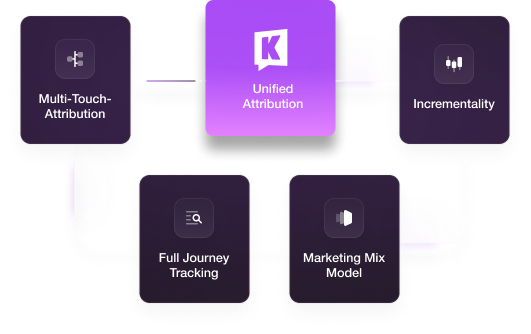
No single method wins, so you combine them. Unified attribution uses MTA as the daily backbone, folds in survey data, redistributes unattributed revenue to awareness channels via MMM, and anchors the whole thing to incrementality tests as a “truth prior.” Disagreement between methods becomes signal, not noise. The result: one model that's daily, full-funnel, and still actionable at the ad level.
82:39 min
Summary of Methods
What this section covers:
Match method to maturityGranularity vs. the full pictureBetter questions, better budgets
A clear map of which method to trust, when, and why, matched to your stage of growth. Early brands start with platforms and surveys; multi-channel brands add independent MTA; brands investing in awareness need MMM; at scale, geo-tests settle the big budget bets. The throughline: better questions beat false certainty, and that's how you see through marketing's half-truths.





























-ai%2520(3).png)